Security is always the last thing on the minds of most event planners. Venue booking comes first. Catering, entertainment, and décor. All these are arranged well before the event. Security is not even considered until the event starts.
But then, disaster strikes.
The gatecrasher refuses to leave the premises. Two attendees begin arguing at the bar. One guest drinks a bit too much, and things start heating up quickly. And now you’re thinking to yourself for not having picked up the phone earlier.
This guide will take you through the steps on how to book security for your event. We discuss everything from the costs involved, the number of security personnel needed, questions to ask before you sign any contracts, and warning signs that most people ignore.
Why Security Guard for Your Event is Necessary
People gather at events. Events will bring a degree of safety risk due to uninvited guests, a disruptive, intoxicated guest, or a drunken crowd. Security is as important for a small private function as it is for a concert or nightclub.
A guard on duty will provide comfort to your guests while managing crowd control, checking guest IDs at the entrance and exit, and dealing with disturbances. The presence of security is valuable enough, even without the alcohol, to warrant security services.
5 Major Types of Event Security Guards
1. Uniformed security guards
These guards work on-site and in the open. Their visibility usually deters bad behavior. They are useful for entrances and exits and for crowd control.
2. Door guards and bouncers.
These guards are primarily used at events like parties, bars, and nightclubs. They control who enters and who does not, and deal with disruptive guests.
3. Mobile patrol services
Guards that visit the venue or patrol the area around it. Mobile patrol security services are the best for events that are outdoors or at large venues with a lot of entry points.
4. Close protection / VIP security
refers to personal protection services for high-profile guests. It is a more specialised and more expensive service.
5. Event security management
A complete team with a supervisor who organises and coordinates security for the event. It is used at large-scale events that require security to cover multiple areas.
How Many Security Guards Do You Actually Need?
It is not wise to understaff your team and leave gaps that would impact the event. Also, over-staffing your team and paying for security personnel who are not required is equally unnecessary.
There is a standard practice that is followed by most professionals working in this field, which states that for an average event, there should be one security guard per 100 attendees. But for high-risk events, which involve drinking and outdoor nighttime events, one security guard for every 50-75 attendees would be needed.
The size and structure of the venue also matter a lot. For example, if the venue involves only one room and one entrance, fewer guards would be needed compared to a multi-level venue having different entrances and exits. One guard is always required for the main entrance.
PRO TIP: For small private events with fewer than 50 attendees, one door security guard is more than enough. An additional two guards can be included in large venues and risky events.
What is the Cost To Hire a Security Guard For an Event?
Pricing changes according to your site, the type of event it is, the number of guards needed, and whether you hire guards through an agency or if hiring guards is done independently. An honest approximation is offered below based on the market average.
| SERVICE TYPE | AVG. HOURLY RATE | BEST FOR |
| Door Staff / Bouncer | $20 – $30 /hr | Parties, Small events |
| Uniformed Event Guard | $25 – $50 /hr | Corporate events, Weddings |
| Mobile Patrol Officer | $30 – $55 /hr | Outdoor events, Large venues |
| Advanced Security Guard | $50 – $90 /hr | High-risk events |
| VIP / Close Protection Guard | $75 – $150+ /hr | Celebrities, Executives, and Security |
Step-by-Step Process: How to Hire Event Security
When you want to hire security for your event, follow these steps to ensure the process is time-efficient.
Step 1 – Check What Your Security Requirements Are
Describe the event by writing down the type of event being held, the expected number of people, the location and its layout, the duration of the event, and any security concerns regarding the event, such as concerns regarding alcohol, subs, or cash management. It is your brief.
Step 2 – Seek Out Event Security Companies
Make a list of event security companies that operate within your region. Go through your list and determine which of the companies is fully licensed and insured. A licensed company offering security services for the party or event host, as their business will be held liable for any incidents that occur.
Step 3 – Request 3 or More Quotes
Do not accept the first offer. Obtain written quotes from a minimum of three companies and compare their offered services.
Step 4 – Vet Security Companies Thoroughly
Do not hesitate to ask good security agencies to describe the qualifications of their guards who will be working. Good agencies will have no problem describing their training, certifications, and previous events they have provided service to.
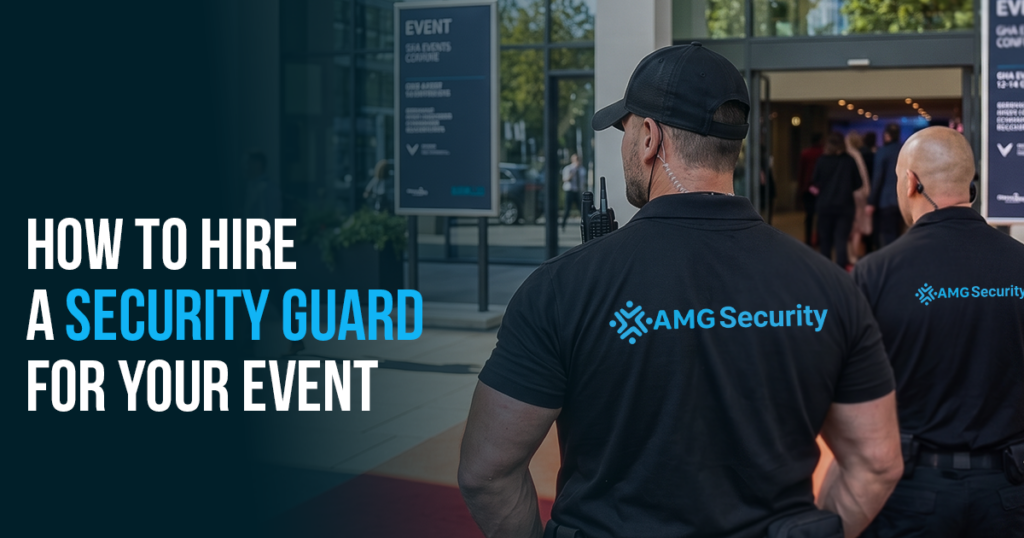
In such an instance, planners usually opt for companies that can clearly show their experience with dealing with past events and crowd management; for instance, AMG Security is among the companies known for this practice.
Step 5 – Conduct a Site Walk
Credible companies will want to do a site visit to your venue ahead of the event to plan where their guards will be posted.
Step 6 – Put Everything in Writing
Before the event, request a written contract detailing the number of guards, the time the guards will perform duty, the responsibilities the guards will be assigned, and the procedures for different emergencies. The contract must also provide the name and contact number of the security company’s Chief Operations Officer.
Questions to Ask Before Hiring A Security Company
Most event planners forget about this part of the process when arranging security for an event. It will help differentiate the professional event planning company from the cheap one.
- Are your security guards completely licensed and insured in this area?
- What kind of training have your guards received for crowd management?
- Have you covered events of this scale?
- Who will supervise the security detail on your site, and how may I get in touch with them?
- If something goes wrong, how do you think the situation will get worse?
- Do your security guards use radios or any other form of communication?
- What type of security guard uniforms will you be providing?
- If the event goes beyond the scheduled time and ends up running late, do you charge for additional hours?
- Could you share the contact details of people that you have provided security for?
- What if a security guard assigned to my event calls in sick on the day of the event?
If any of these questions about training, licensing, or incident protocols cause the company to stumble, do not do business with them. The best of the best will answer questions like these easily.
Red Flags to Avoid When Hiring Security Companies
Like every other profession, a security firm has its share of untrustworthy service providers. These are the things that will keep you from signing a contract.
No paperwork
Unless there is documentation, there is no agreement with security.
No proof of legitimacy
You are allowed to ask for their license number, and good companies will be happy to share it.
Unusually low prices
Bargain prices often mean low-quality guards who are untrained and unlicensed.
Failure to do a site visit
If a security company has any credibility, they will want to see the site where the event will happen.
Failure of communication
If you are not prioritised before the event, you will have trouble communicating with them during the event.
No point of contact onsite
If the security detail will be managing a large gathering, there will be a person in charge of the security detail.
Mistakes Event Organisers Make When Hiring Security
Even event planners make mistakes. Here are the most popular mistakes and how to correct them.
Booking too late
Good quality security teams are very hard to find. They get booked quickly, especially if your event takes place over the weekend or on a holiday. Aim to book your security team at least 2-4 weeks before the event. A lead time of 6-8 weeks is more desirable for large events.
Choosing price over fit
The lowest cost option ends up being the worst option. A guard who has zero experience dealing with a crowd of 300 is more damaging than having no guard at all. They create a false sense of security for the events.
No Guard Briefing
Guards need information like schedules, lists, and maps. They need to be briefed on how you want them to manage alcohol related situations and who they should contact for help when such situations arise. Don’t expect the guards to figure everything out on their own.
Ignoring the ending event
The end of the event is often the most chaotic and disruptive. It is when the highest number of guests are in their unstable phase. Make sure your security staff is on duty during the exit of the guests.
Forgetting about parking and entry queues
Sometimes the guests were already irritated before their arrival due to a lack of security in the entrance queue area. Having security in the parking lot and entrance queue would reduce their frustrations before entering.
Final Words
It’s easy to hire a security guard once you know how. Determine your event necessities, find licensed firms, be proactive, and get everything documented and recorded.
Failing to recognise security is an event planning mistake. Security should be one of the first contracts you make, like food and a location. If your event has proper security arrangements, it will be a success.
No one wants an unsuccessful or traumatic home party or gala. Strategic planning makes every event you host successful.
FAQs
1. How far in advance should I hire a security guard for my event?
Most events should start hiring security about 2-4 weeks in advance. Larger events that may have over 500 guests should have security booked 6-8 to eight weeks in advance.
2. Do I need a licensed security guard?
Whenever hiring security for an event that is public or semi-public, only hire licensed security guards. If a non-licensed person is hired for security, this can create a legal liability for the organizer in the event of an incident. Guards that are licensed are trained and insured, making them a safer option.
3. What is the difference between an event security and a bouncer?
A bouncer is more of a reactive role and deals with people going in and out of the venue and removing disruptive guests. Security for events is more extensive, dealing with the management of the crowd and a range of emergencies and communications, done proactively.
4. Is security necessary for small private parties?
No, not always. But events that are being held in a semi-public venue that are larger than 50 guests, and especially events serving alcohol, should have at least one guard.
5. What should we know about security and patrol services and outdoor events?
Security and patrol services are extremely valuable at outdoor events due to the challenges of controlling the area. Mobile patrol officers can guard site areas quickly.
6. What is included in hire security guard's job description for events?
The duties of a security guard position at events usually include surveillance of entrances and exits, inspection of tickets and ID cards, crowd control, disturbance management, coordination with event staff and emergency services, and report writing.