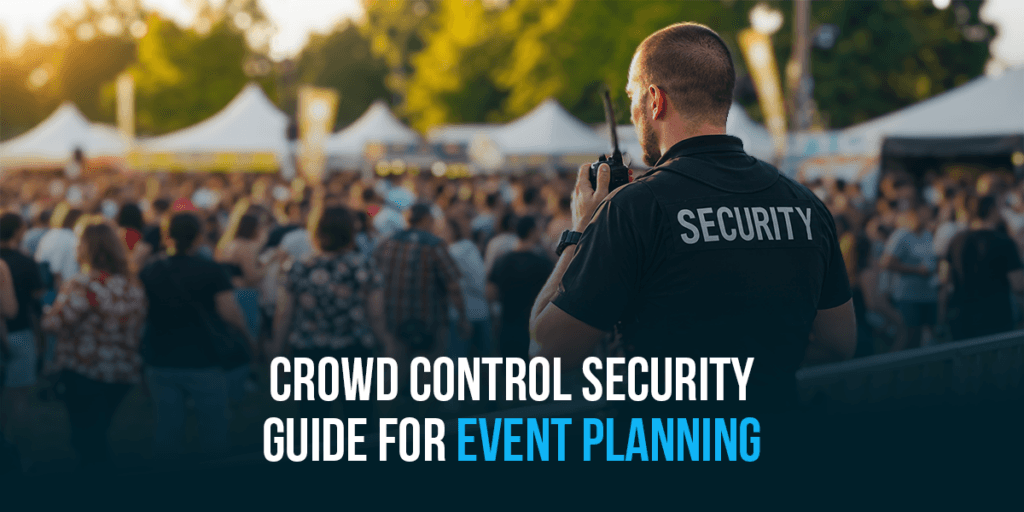
Crowd control security guards help manage people at concerts, festivals, sports events, public gatherings, and private events by guiding crowd flow, controlling access, and responding to risks. Crowd crushes and collapses can cause deaths when extreme pressure stops people from breathing, which is why effective crowd control focuses on maintaining space, keeping routes clear, using trained staff, and placing safe crowd control barriers. Good crowd control planning covers risk checks, entry and exit routes, emergency plans, equipment, staffing, legal requirements, and costs, with security needs changing by crowd size, event type, and risk level.
A crowded event can turn stressful in minutes when people cannot see where to go or find a clear way out. Event organisers need crowd control guards when large groups gather at concerts, festivals, and sports events. The security guards also help manage crowds at other public gatherings and busy private functions. They guide guests and manage entry points. Crowd control officers keep walkways open, control queues, and act when crowd movement becomes unsafe. Without proper crowd security, organisers can face several problems. These include blocked exits and long queues. Overcrowding can also lead to conflicts and dangerous crowd surges. In Australia, event requirements vary by state, venue, crowd size, and risk level. AMG Security provides crowd control security services for events and public gatherings across Australia. This crowd control security guide covers the basics of crowd control, event safety and planning, legal and cost considerations, and hiring crowd control security.
What Is Crowd Control Security?
Crowd control helps manage large groups safely during busy events and public gatherings. It guides people and helps control overcrowding. It also keeps clear paths for safe movement. Crowd control security focuses on practical safety at critical points. Security guards guide people and oversee entry points. They also keep walkways clear and respond to unsafe crowd movement. Riot control has a different purpose. It deals with violent unrest and uses trained police, barriers, and more powerful response measures.
Early crowd control used police lines to push back or disperse large crowds. From the 1920s to the 1940s, officers used these lines with little protective gear. In the 1950s, riot control teams started using shields and batons to better protect themselves during crowd confrontations. Tear gas became popular in the 1960s and 1970s. Today, crowd control emphasizes prevention, planning, and communication. Trained crowd control security staff manage entrances, walkways, and risks before they become serious.
When Does Your Event Need Crowd Control Security?
Concerts, festivals, sporting events, and public gatherings need crowd control security. Public gatherings include protests, rallies, parades, and community celebrations. Exhibitions, trade shows, and conventions also need crowd control guards. Large private events include weddings, corporate events, product launches, and parties. Your event needs crowd control security when many people gather in one place. The need also depends on the venue layout, entry points, and safety risks.
What Are Crowd Control Security Services?
Crowd control security services keep large groups of people safe and organised. Security guards guide people and handle problems that may arise. The actual security services companies provide to manage crowds:
- Crowd control security guards
- Access control services, like checking tickets or entry points.
- Managing queues.
- Monitoring crowd size and movement.
- Directing the crowd through venue areas.
- Barrier Management
- Event security for guests and restricted areas, etc.
- Handling conflicts.
- Emergency and evacuation support.
- Patrol and surveillance.
Difference between Crowd Control and Crowd Management
Crowd control and crowd management overlap, but they have different focuses. Crowd management is the broader planning and monitoring before and during an event. It can also involve post-event review. Crowd control involves the more specific actions used to maintain order and respond to problems.
Most large or busy events need both. Use crowd management service when you need to plan how people move through an event. Use crowd control security when you need security measures to maintain order and respond to crowd problems. Crowd control officers help put the security plan into practice.
Types of Crowds and Their Behaviour
There are different types of crowds, from energetic and calm to dense, dynamic, and queuing crowds, each with distinct or overlapping crowd control security needs.
- Excited and Highly Energetic Crowds
An excited and highly energetic crowd is a group of people who are enthusiastic or actively reacting to an event. People may cheer, jump, or gather tightly around a performer or attraction. Crowd control security guards use proactive control and close monitoring for this type of crowd.
- Passive and Calm Crowds
Examples of a calm crowd include people at a museum, an audience during lectures, customers waiting calmly in a queue, or guests at a formal ceremony. This type of crowd needs basic monitoring like visible guards and emergency planning to prevent small issues.
- Dense and Dynamic Crowds
In a dense and dynamic crowd, people have limited personal space. It’s a large group with people packed closely together while moving and trying to change directions. For example, people leaving a stadium after a match or a crowd entering a concert. Crowd control guards focus on preventing dangerous crowd buildup.
- Queuing Crowds
A queuing crowd is basically people waiting in an organised or informal line for tickets, entry, or any other activity. Queuing crowds need basic crowd control and management, for example, clear signs and extra staff at bottlenecks. A small, calm queue needs minimal security. Large queues at festivals or stadiums need trained crowd control security guards.
Crowd Crushes and Collapses
Crowd collapse is a dangerous crowd incident where people lose their balance and fall, often in a chain reaction. A crowd crush is a dangerous crowd incident where extreme pressure squeezes people together. This can lead to suffocation or serious injury. They often occur because of poor crowd planning, overcrowding, uncontrolled entry, sudden crowd movement, etc.
How Do Crowd Crushes and Collapses Cause Death?
Crowd collapses and crushes can cause death by preventing people from breathing and causing severe body or head injuries. Extreme pressure can compress a person’s chest, which makes breathing difficult or impossible and results in asphyxia.
How Crowd Control Guards Prevent Crowd Crushes?
Crowd crushes can be prevented at events by giving people enough space to move around. Give people clear signs so they know where to go. Prepare an emergency plan, act early, and use barriers to control the flow. Trained crowd control security guards usually spot pressure or unusual movement early.
AI Crowd Monitoring
At your events, you can use AI crowd monitoring as well. It uses cameras and software to track the movement of crowds in real time. AI monitoring flags areas where crowds are dense. It helps security teams spot dangerous overcrowding early so they can respond before a crowd crash occurs.
Crowd Control Security Strategies and Techniques
Crowd Control Strategies
Crowd control strategies are the approaches security guards use to keep crowds safe and orderly. The common crowd control strategies include:
- Control crowd flow, e.g, how people enter and leave the venue.
- Control access, e.g, use ticket checks
- Keep incoming and outgoing crowds apart where possible
- Manage crowd density, e.g, checking that too many people do not gather in one place
- Use early intervention, e.g, spotting signs of pushing or agitation.
- Keep exits and emergency lanes open throughout the event.
Crowd Control Techniques Used by Security Guards
Crowd control security techniques are the specific actions security teams use to carry out those strategies. Common crowd control techniques include:
- Barriers to create boundaries and guide movement
- Managing queues
- Place guards at entrances, exits, or high-risk areas
- Clear signage
- Give clear instructions to crowds
- Guards actively observe crowd behavior
- Use cameras and AI systems to detect unusual movement
- Controlled entry
- Fast emergency response
Managing crowd flow is a strategy, whereas using barriers and one-way routes is a crowd control security technique for managing that flow.
Technology Used for Crowd Control Today
Most event security firms you would hire for a concert, festival, or private event are still manual and guard-based. This is because it’s cheaper to run, and event organizers just want licensed guards on their site. Small or mid-sized events also don’t have the budget to justify sensor networks. Advanced tech (AI, IoT sensors, predictive analytics) is real and growing. This technology is used at major stadiums, big platforms, and large multinational security firms. In Australia, this shows up as AI-powered video analytics, drone surveillance, biometric entry systems, and predictive crowd-flow modelling.
Crowd Control Equipment and Physical Measures
Crowd control security uses barriers, signs, and screening tools to manage crowds safely. Comfort measures and monitoring technology also help keep people safe and organised.
Crowd Control Barriers And Fencing
Barriers are the backbone of crowd control security guards’ toolkit. They block off paths and protect staff and VIP areas. They keep foot traffic moving in one direction.
- Stanchions with retractable belts for queues at banks, theaters and ticket counters
- Steel or plastic crowd control barriers for concerts, parades and street fairs
- Temporary fencing to divert pedestrians away from danger zones
- Stage barriers to keep the crowd a safe distance from performers
- Barrier mesh or expandable barriers for quick setup at pop-up events
Signage And Ground Markers
Signs and floor decals tell people where to go without needing a staff member at every corner. Directional signs, warning signs, and restricted area signs cut down on confusion at entry points. Painted decals on the ground work well for lining up queues or marking exit routes.
Detection And Screening Tools
Many venues use metal detectors and sniffer dogs at entry points to catch weapons or drugs before they reach the crowd. These checks slow entry a bit, but they lower risk once the event is underway.
Comfort Measures
A relaxed crowd is a safer crowd. Awnings, shade structures, and cooling fans matter a lot at outdoor summer events. Bored or overheated crowds get restless faster, and restless crowds are harder to manage. Adding some form of entertainment near queue lines also keeps people calm while they wait.
Monitoring Technology
Cameras and density sensors let crowd control security guards watch movement across a whole venue from one point. Real-time footage helps staff spot a bottleneck early and send people to fix it before it turns into a crash.
Using Barriers Without Trapping People
Heavy barriers and aggressive restrictions are not always safer. Packing people too tightly behind fences, or blocking exits without an alternate route, can raise the risk of a crush rather than lower it. The Hillsborough disaster is one well-known case where excessive restriction on the crowd made the outcome worse. Equipment should guide movement, not trap people in it.
How to Create a Crowd Control Plan for a Large Event
To create a crowd control plan, start by checking crowd size, venue risks, and busy areas. Then plan entry and exit routes, assign security guards, prepare emergency steps, and set up team communication. Large events need a written crowd control plan. Use these five steps to build the plan, from the venue walkthrough to guest entry.
Assess Crowd Risks
Start by assessing the event. Check the expected headcount, the age group, the venue layout, and event type. A calm art exhibition needs far less planning than a late-night concert.
- Walk the venue and note narrow corridors, low ceilings and single-entry rooms
- Check past incident reports if the venue has hosted events before
- Estimate peak arrival and departure times
- Flag any known risks such as extreme heat, uneven ground or limited parking
Once the risks are mapped out, rank them by how likely they are and how serious their impact could be. Use this ranking to allocate staff and budget.
Plan Entry and Exit Routes
Poor crowd movement can cause bottlenecks and surges. People need clear entry and exit routes.
- Set up multiple entry lanes to avoid one long queue at a single gate
- Mark exits with lit signs that stay visible even if the power goes out
- Keep emergency lanes free of chairs, tables, or parked vehicles
- Place barriers along the route so people cannot cut across and cause a jam
Routes should be tested before the event. Test how a full crowd would move through the routes. If two routes cross at one point, that spot needs its own staff member.
Assign Security Staff
Estimate the number of staff needed. Crowd control security guards should be placed at gates, along barrier lines, and near any spot where the crowd is likely to bunch up.
- Assign one team lead who has full view of the event through radio contact
- Post guards at every entry and exit point
- Place extra staff near the stage, bar area, or any high-energy zone
- Give each guard a written list of duties so each guard knows their duties.
Some venues use a ratio of one guard for every 100 to 250 guests, but this changes based on the type of event and the layout of the space.
Plan for Emergencies
Events can face medical issues, bad weather, or crowd surges. Define a response for each risk.
- Set up a first aid station with trained medical staff on site
- Write a step-by-step evacuation plan for fire, storm, or structural issues
- Train staff to recognize early signs of a crowd surge, such as people pushing forward or losing balance
- Keep a stock of stretchers, water and basic supplies near the medical point
Coordinate Event Teams
The plan can fail if teams cannot communicate. Security, ushers, medical staff, and local police or fire services all need the same event plan and procedures.
- Hold a briefing with every team the day of the event
- Share radio channels or a group messaging app for instant updates
- Give local police and fire departments a copy of the event layout and timing
- Run a short walkthrough with all teams so everyone knows their post
Following these steps helps crowd control security guards and event staff prevent problems instead of reacting to them.
Crowd Control Security During Different Stages of an Event
Crowd control security does not stop once guests enter the venue. Security teams adjust their focus as the event moves from arrival to the main activity and finally to departure.
- During Guest Arrival
During arrival, guards keep entrances clear and prevent queues from blocking walkways or creating pressure near gates.
- During the Main Event
Once the event starts, guards pay closer attention to stages, bars, attractions, and other areas where people may gather. Guards also respond to conflicts, medical incidents, or unsafe crowd movement.
- During Event Closure
When an event ends, security guards direct people toward exits, parking areas, transport points, or other routes. They also help reduce congestion outside the venue.
How Much Does Crowd Control Security Cost?
Crowd control security guards typically cost between $45 and $110 per hour in Australia. The minimum rate sits around $45 per hour. The average job falls between $60 and $75 per hour. High-risk events with extra staffing needs can push the maximum rate to $90 or even $110 per hour. In Melbourne, event security guards usually charge between $65 and $85 per hour. A large party with alcohol or known crowd risks can cross $1,000 total once you factor in guard numbers and shift length.
What Factors Affect Crowd Control Security Pricing?
Crowd control security rates depend on event type, crowd size, alcohol presence, and the risk level of the venue. Late night events and outdoor festivals usually cost more than a daytime corporate function.
- Crowd size: The number of security guards needed also depends on how many people are attending the event. When more people attend an event, you usually need more security guards.
- Number of entry points: More entry points also mean more security staff and higher costs because each entrance needs its own trained guards.
- Event duration: Events that run overnight or stretch across multiple days also cost more. They require extra shifts and rested staff to cover them properly.
- Extra security features: They add to the price too. VIP sections, barricades, and metal detectors all take more setup time and more guards.
- Guards experience and training: The local cost of hiring crowd control security guards and their level of training and experience also affect the final price you pay.
How Security Companies Price Crowd Control Services
Most firms quote an hourly rate per guard for crowd control security, then multiply by headcount and shift duration. Supervisors and coordinators are billed separately on larger jobs. You may have to pay a minimum number of hours for each guard, plus an extra fixed fee in some cases for the company to come to the event and set things up. Travel time can add to the bill too if guards are driving in from far away. Weekend and holiday events often come with a higher hourly rate than a regular weekday booking. And if a client needs guards on very short notice, say within a day or two, that rush request can increase the price as well.
How Many Security Guards Do You Need for a 500-Person Event?
For crowd control security, a low-risk event needs roughly one guard per 100 guests, so five guards for 500 people. Higher risk events call for one guard per 50, meaning ten guards plus a supervisor. The right number also depends on the venue layout. If alcohol is being served, one or two extra guards may be needed because drinking raises the chance of trouble. In outdoor events, guests are spread out over a wider area, and they can slip past a smaller team. For events with a stage or a VIP area, a couple of dedicated guards stay close to that zone the whole time. It’s better to keep one or two guards in reserve, so someone is free to respond fast if an incident breaks out.
How to Hire Crowd Control Security for an Event
Hiring crowd control security for an event starts with checking licences, insurance, experience and staffing plans.
How to Choose a Crowd Control Security Company
Start by looking at how long the company has been operating and what kind of events they usually staff. A firm that mostly handles retail patrols may not have the experience for a festival with thousands of guests.
- Check if their crowd control security guards hold current individual licences under your state’s security law
- Look for reviews or references from past clients, ideally from events similar in size to yours
- Ask if they carry public liability insurance and how much coverage it provides
- Confirm they can scale staff numbers up or down if your guest count changes close to the event date
What to Check Before Hiring Event Security
Get the agreed services, staff numbers and fees in writing before booking.
- Request proof of licensing for each guard assigned to your event.
- Ask for a written quote that breaks down hourly rate, guard count and any supervisor fees
- Confirm the cancellation policy in case your event date changes
- Check if the company provides a site walkthrough before the event to plan guard positions
This step protects you if a dispute comes up later about what was agreed.
Questions to Ask a Crowd Control Security Provider
A short conversation before booking can show you how the company handles staffing changes, communication and emergencies.
- How many guards do you recommend for my expected crowd size?
- Do your crowd control security guards carry radios or another way to stay in contact during the shift?
- How do you handle a medical emergency or evacuation?
- Can you share an example of a similar event you have staffed before?
Legal Issues in Crowd Control
Crowd control in Australia is governed by state liquor licensing laws, security licensing acts, and council permit conditions. Getting any of these wrong can mean fines, licence suspension, or a cancelled event.
When Is Crowd Control Security Required for Public Events?
Requirements are state-based and generally depend on a combination of trading hours and patron capacity, not trading hours alone.
New South Wales
Venues in certain entertainment precincts, venues with late trading hours, larger patron numbers, or specific liquor licence conditions may be required to employ licensed crowd controllers. Requirements are set by Liquor & Gaming NSW.
Victoria
Some venues may need licensed crowd control security guards if they stay open after 1am. The number of guards can depend on how many people the venue can hold. A common guide is one crowd controller for every 100 patrons. These requirements come under the Liquor Control Reform Act 1998.
Queensland
Venues in certain Safe Night Precincts may need licensed crowd controllers if they stay open after midnight. The number of controllers depends on how many people the venue can hold. These requirements come under Queensland’s Liquor Act 1992.
Legal Duties and Licences
Crowd controllers must have a valid security licence before they can work. The venue or security company should check the licence online through the relevant state government system. This check can show whether the licence is current, suspended, or expired. Some venues can have extra government requirements for security staff, CCTV, identification, and staff numbers. These rules vary between Australian states and individual venue licences.
Permits & Safety Plans
Outdoor or large events need permission from the local council. This is separate from getting a liquor licence. If the event will affect roads, event organisers need a Traffic Management Plan which explains how traffic and pedestrians will be managed. Tents, stages, barriers, marquees, or other temporary structures need separate approval. Event organisers should also prepare a safety plan that covers:
- Crowd risk assessment
- Entry and exit routes
- Emergency and medical plans
- Crowd controller numbers
- Keep contact details for police, fire services, and medical teams.
Wrapping it Up
Safe crowd control starts before guests arrive. Organizers need to assess crowd risks and plan clear entry and exit routes. They also need trained crowd control guards at key points, along with an emergency plan. Barriers and signs guide people through the venue, whereas proper queue management prevents crowd congestion. Surveillance helps guards monitor movement, and giving the crowd clear instructions helps people move safely without creating serious problems. If you search for crowd control security cost, it would vary based on crowd size, type of event, risk level, number of staff, and event hours. This crowd control security guide explains why crowd crushes and crowd collapse are dangerous, can become deadly, and require proper crowd control planning. In Australia, before organizing an event, check state licensing rules relevant to crowd control. Through the government’s official website, check permit requirements and other local event rules before hiring a security team. In Australia, AMG Security provides several security guard crowd services as well as controlled security guard services for events. For event-specific pricing, contact AMG Security for a free quote. The quote can be based on your event size and security needs.
Frequently Asked Questions
How many security guards do I need for a 500-person event?
The number usually depends on the event type, venue layout, and risk level. A low-risk event in Australia needs around one guard per 100 guests. Higher-risk events may need closer to one guard per 50 guests.
How do security guards manage large crowds?
Security guards keep large crowds safe and organised by controlling entry points, managing flow, and directing people to the right areas. They also manage queues, keep exits clear, and step in when conflicts occur.
What technology is used for crowd control today?
Modern crowd control uses CCTV, AI-powered video analytics, crowd density sensors, biometric entry systems, drone surveillance, and predictive crowd-flow modelling at larger events. Smaller events often rely mainly on trained security guards.
What causes crowd crushes and how can they be prevented?
Crowd crushes happen when strong crowd pressure leaves people unable to move or breathe. Clear routes, crowd monitoring, barriers, and enough space can reduce the risk.
How much does crowd control security cost in Australia?
Crowd control security costs often range from about $45 to $110 per guard per hour in Australia. The final price depends on the number of guards, event size, and risk level. It also depends on location and event hours.